

Rising labour costs, unpredictable weather patterns, water scarcity, and declining soil health are creating serious challenges for Indian farmers. Traditional farming methods, which rely heavily on manual observation and uniform input application, are no longer enough to maintain productivity and profitability.
To overcome these problems, Indian agriculture is gradually shifting toward smart farming, a technology-driven approach that uses real-time data and precision tools to improve crop performance while reducing resource wastage.
The Indian smart agriculture sector is growing rapidly, with precision farming and smart greenhouse technologies leading the transformation. These innovations help farmers increase yields, reduce costs, and improve long-term sustainability.
In this article, we will explore what smart farming is, how it works, its benefits, and the major techniques currently used in India.
What is Smart Farming?
Smart farming is a modern agricultural approach that uses technologies such as:
- Soil sensors
- Drones
- Satellite imaging
- GPS-enabled tractors
- Artificial Intelligence (AI)
- Internet of Things (IoT) devices
- Cloud-based monitoring systems
Instead of relying on guesswork, smart farming collects real-time data about soil moisture, crop health, weather conditions, and nutrient levels. This data helps farmers make accurate decisions at the right time.
How Smart Farming Works
Smart farming replaces uniform farming practices with precision-based management. It focuses on applying the right input, at the right place, at the right time.
Here’s how it works:
1. Field Sensors & Remote Monitoring
Soil sensors measure moisture, temperature, pH levels, and nutrient content. Drones and satellites capture crop health images to detect stress early.
2. Smart Irrigation Systems
Automated irrigation systems activate only when soil moisture drops below required levels, saving water and preventing over-irrigation.
3. AI-Based Recommendations
AI tools analyse soil data, weather forecasts, and crop conditions to provide guidance on fertiliser use, pest control, and harvesting time.
4. Automated Machinery
GPS-guided tractors and modern equipment improve accuracy in sowing, spraying, and harvesting while reducing labour dependency.
Why Smart Farming is Necessary in India
Smart farming has become important due to several challenges:
1. Water Scarcity
Precision irrigation can reduce water use by up to 30–50%, especially in drought-prone regions.
2. Rising Labour Costs
Automation helps complete farm operations faster and more efficiently.
3. Climate Change
Early weather alerts and monitoring systems help farmers respond quickly to sudden climate changes.
4. Increasing Input Costs
Targeted application of fertilisers and pesticides reduces waste and lowers overall production costs.
Benefits of Smart Farming
Smart farming provides multiple advantages beyond just higher yields.
Precision Resource Use
Water, fertilisers, and pesticides are applied only where needed, reducing waste and environmental damage.
Higher Productivity
Timely interventions and data-based decisions can improve crop yields by 20–40% in many cases.
Early Pest and Disease Detection
Drone and satellite imaging detect crop stress before visible symptoms appear, preventing large-scale damage.
Labour Efficiency
Modern equipment and automation reduce manual effort and increase work speed.
Better Profit Margins
Lower input costs and improved crop quality result in stronger financial outcomes for farmers.
Environmental Protection
Reduced chemical runoff and efficient water management protect soil health and biodiversity.
Difference Between Traditional and Smart Farming
Irrigation
Traditional: Flood irrigation
Smart Farming: Sensor-based drip irrigation
Fertiliser Use
Traditional: Uniform application
Smart Farming: Variable-rate targeted application
Monitoring
Traditional: Visual inspection
Smart Farming: Drone & satellite monitoring
Smart Farming Techniques Used in India
Indian farmers are increasingly adopting the following techniques:
IoT-Based Smart Irrigation
Soil moisture sensors connected to automated irrigation systems optimise water usage.
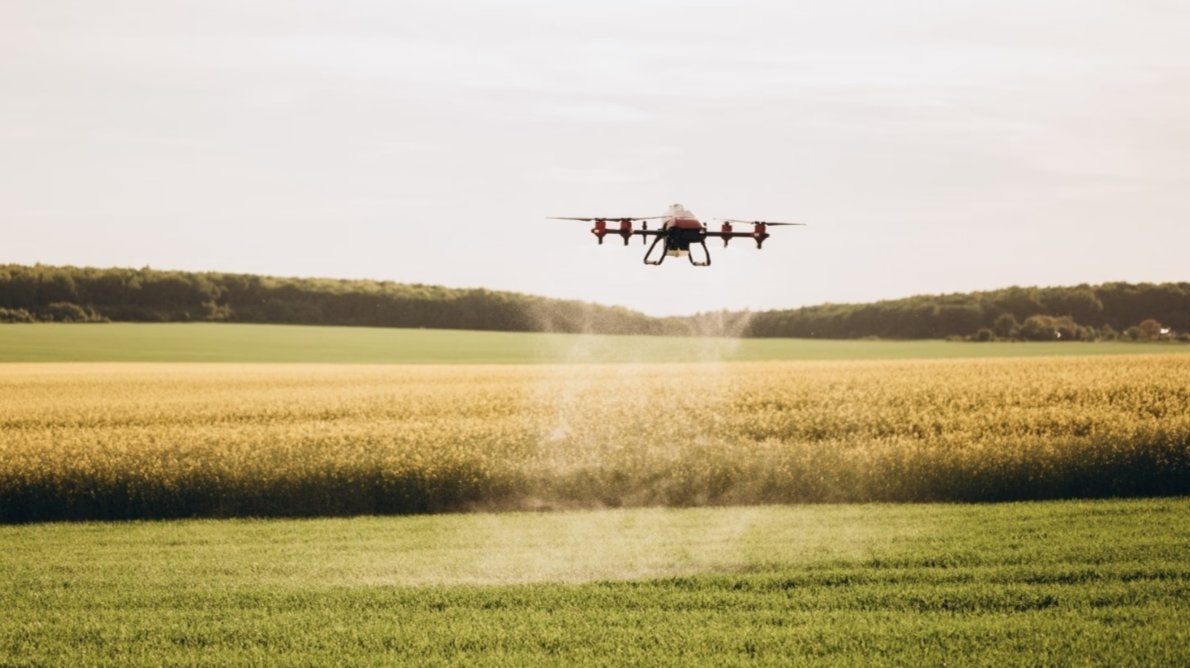
Drone Spraying
Agricultural drones spray fertilisers and pesticides with precision, covering large areas quickly.
Satellite & GIS Mapping
High-resolution satellite imagery helps monitor crop health and predict yields.
AI-Powered Mobile Applications
Mobile apps provide weather alerts, pest detection, and crop recommendations in regional languages.
GPS-Guided Machinery
Advanced tractors and seeders improve planting accuracy and reduce soil disturbance.
Water Harvesting Systems
Techniques like underground water recharge systems support dual-season farming.
Natural and Zero-Budget Farming
Combining traditional practices with data insights improves sustainability.
🌱 Benefits of Modern Smart Farming
Modern smart farming provides many advantages to farmers by combining agriculture with technology. Farmers can monitor crop health using sensors and smart devices, which helps in making accurate decisions. Smart irrigation systems reduce water wastage and ensure crops receive the required amount of water. This method also helps reduce labor costs and improves productivity. With data-based farming, farmers can predict weather conditions and prevent crop damage. Overall, smart farming increases efficiency and ensures sustainable agricultural practices.
🚜 Technologies Used in Smart Farming
Several modern technologies are used in smart farming practices today. Internet of Things (IoT) devices help collect real-time data from farms. Drones are used for crop monitoring, spraying fertilizers, and identifying pest problems quickly. Automated irrigation systems save water and time. Mobile applications allow farmers to track soil moisture, temperature, and crop growth from anywhere. Artificial Intelligence tools help farmers analyze farming patterns and improve yield production.
🌾 Tips for Farmers to Adopt Smart Farming
Farmers who want to start smart farming can follow simple steps. First, conduct soil testing to understand nutrient requirements. Use drip irrigation or sprinkler systems to conserve water. Choose high-quality seeds suitable for local climate conditions. Farmers should also learn to use agriculture mobile apps for weather updates and crop management. Government schemes and agricultural training programs can help farmers adopt modern technologies easily.
Conclusion
Smart farming is not just a trend — it is a necessary transformation for Indian agriculture. By combining technology with traditional knowledge, farmers can:
- Reduce resource wastage
- Increase productivity
- Improve profitability
- Protect the environment
As technology becomes more affordable and accessible, smart farming will continue to empower both small and large-scale farmers across India.
Also read Is Indian Agriculture a Trend or a Real Transformation in 2026?
1 thought on “Smart Farming in India: Precision Techniques and Benefits”